Category Archives for "Cat Q & A"

Does Your Cat Have Smelly Breath Or Swollen Gums?

Learn How You Can Tell If Your Cat Has Dental Problems.

1) Smell Your Cat’s Breath

Breath is a good indicator of your pet’s dental health. So get used to smelling your cat’s breath and know what it normally smells like. If it starts to smell unpleasant, it is likely that your cat may be having periodontal disease.

2) Swollen Gums and Yellow Teeth

It is essential that you inspect your cat’s gums and teeth regularly. Swollen gums, markedly red and teeth with yellow or brown stains may indicate that your cat is suffering from gingivitis. To take a good look in this area, lift the lip of the cat’s mouth and look along the gum line. This condition may require a dental cleaning.

3) Check the Teeth

When inspecting your cat’s mouth, look for small black spots. This may mean that your cat has cavities or broken teeth. Check loose teeth by softly touching them.

4) Check for Gum Swelling

Constant pawing at the side of a cat’s mouth or drooling may tell you that there is a dental problem or infection. If you observe your cat is doing this then try to touch the sides of its mouth. See if there is any redness, swelling or irritation.

Take care of your cat’s teeth!

A friendly reminder from Makati Dog and Cat Hospital

Thanks: http://rathgaelvets.com/how-to-tell-if-your-cat-has-dental-problems/
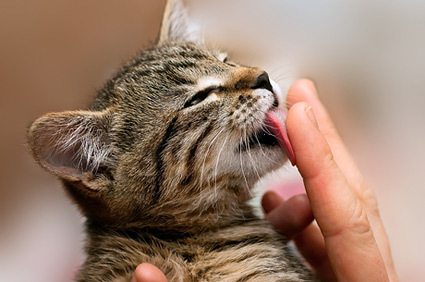
Why Does Your Cat Lick You?

Your cat probably licks you in attempt to groom you! Yes, believe it or not, cats probably lick you for the same reason that they lick themselves! So, if your cat is ever licking you, maybe it’s time for a shower!

Cats may also lick you if your skin smells like food. In this case, be careful — the next lick may end up being a bite!

Cat owners also believe that when a cat licks, they are actually kissing you. Licking can be a way for your cat to show you affection. When your cat licks you, they are saying that they love you!

Cats can also lick you in attempt to get you to move out of the way. If you are sitting on the couch and your cat licks your arm, they may actually want you to move your arm out of the way so they can sit beside you.

Cats lick for many reasons!

Get to know more about your cat’s behavior at Makati Dog and Cat Hospital

Thanks:

http://whydoesmycat.com/articles/57

http://s3.amazonaws.com/assets.prod.vetstreet.com/8f/6481f0bdf911e095940050568d634f/file/02-WDMC-DT-425km080311.jpg

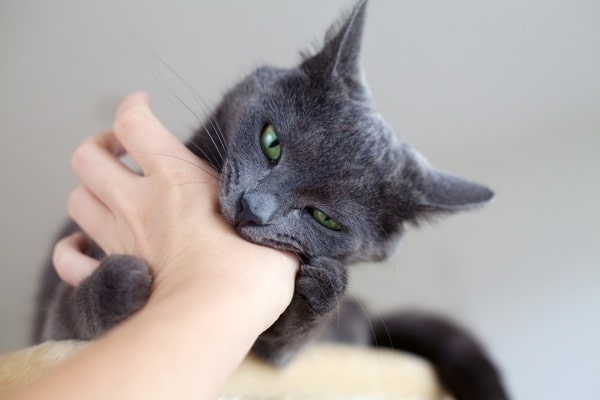
Why Does Your Cat Bite You When You Pet It?

It’s a conundrum, for sure. One minute your beloved kitty is over the moon with pleasure as you scratch her favorite spot and the next thing you know you’re left staring at tooth marks on your arm.

You’re not the only one suffering. Many pet owners call this common behavior “Love biting,” but feline behaviorists have given it a more formal name: Petting-induced aggression—and it’s a poorly understood topic.

Typically, a friendly cat seeks out human attention, only to turn on his lavisher of attention once the affection seems to have gone on for too long. Owners describe these cats as changing from friendly to feral “like a light switch.”

Despite the perplexing nature of this uniquely feline way of acting out, a couple of possibilities have been proposed to explain why cats might do this:

  1. It may be a manifestation of so-called status-induced aggression, in which cats seek to control a situation.
  2. There may be some neurologically significant negative stimulus associated with being petted at length that affects these cats in particular.
  3. These cats may be especially subtle at letting humans know when they’re unhappy, so that their change in attitude appears more sudden than it truly is.

Whatever the cause, the good news is that this behavior does not necessarily mean you can’t interact with your cat meaningfully. Your veterinarian can coach you to recognize the very subtle warning signs associated with your cat’s displeasure before it reaches the biting point.

Get to know more about your cat’s behavior at Makati Dog and Cat Hospital

Thanks:

http://www.vetstreet.com/our-pet-experts/why-does-my-cat-bite-me-when-i-pet-her

http://www.catster.com/wp-content/uploads/2015/06/cats-bite-fingers-gray-cat.jpg

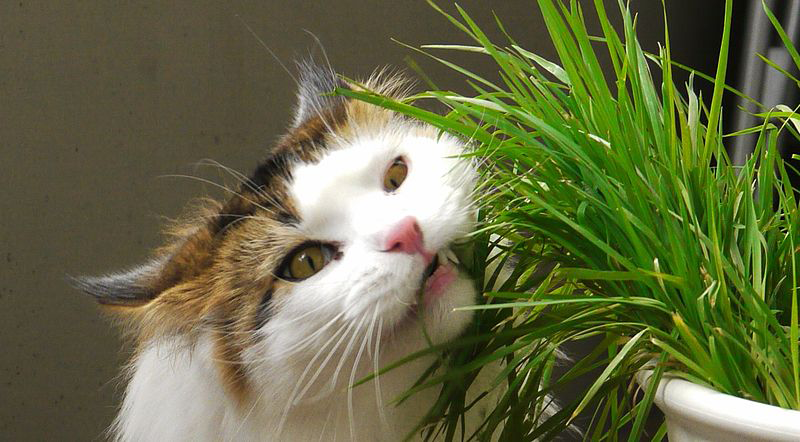
Why Does Your Cat Eat Plants?

Your cat is a carnivore, so why is he eating your plants? Plant eating is a normal cat behavior, but almost every pet owner is annoyed by it.

In the wild, cats probably eat plants as a source of fiber. In most cases, owners must either accept the behavior, remove the plants from the home, or try to redirect the behavior to a different source (such as cat grass).

However, if the plant in your home is poisonous, you must remove the plant from your home or place it in a location where the cannot cannot chew it. If your cat has eaten a poisonous plant, you should take him to see a veterinarian. Toxic plants can cause some serious health issues for your cat!

Is your cat eating his food? If your cat does not like his food, he may be eating your plants as a food source.

Cats eat plants because the plant either tastes good, or feels good on their mouth while they are eating it. Some plants, like catnip, also produce a pleasurable effect. Cats don’t know which plants are safe plants and which plants are hazardous plants.

How can you stop your cat from eating plants?

Training your cat to stop eating your plants is very difficult. Most likely, you will end up getting rid of your plants, or choosing safe plants and accepting the ‘chewed up’ appearance of your plant!

However, if you’d like to keep your plants, here’s some things that you can try:

  • Place your plants in cat-proof places, or places that are difficult for your cat to access
  • Provide your cat with cat grass in order to redirect the issue to an appropriate plant
  • Place mothballs to the plant’s soil
  • Spray the plant a scent or product that will keep your cat away from the plant
  • Attempt to train your cat that he cannot chew the plant (use a water squirter or air horn when your cat bites the plant)

What should you do if your cat eats a plant?

If your cat eats a plant, you should contact your veterinarian. If your cat has eaten a poisonous plant, your cat needs to see a veterinarian as soon as possible. You should also bring the plant with you when you go to see the veterinarian so they can determine the type of plant. Different plants can affect cats in different ways. Some plants may simply cause your cat to have an upset stomach and diarrhea, while other plants can be toxic and sometimes fatal to cats.

Get to know more about your cat’s behavior at Makati Dog and Cat Hospital

Thanks:

http://whydoesmycat.com/articles/108

http://toddsseeds.com/wp-content/uploads/2013/09/cat-lrg.png

Why Does Your Cat Make You Sneeze?

Your cat may be making you sneeze because you may be allergic to your cat. Don’t worry, approximately 1/3 of people who are allergic to cats live with cats in their home. You can keep your cat!


What is a cat allergy?

Cat allergy is caused by a type of protein present in the dander (skin flakes — yuck) and saliva of cats. The allergens are airborne and are then inhaled by humans through the nose and lungs. After inhaling the allergens people react and experience a variety of symptoms.

What are the symptoms of cat allergies?

Cat allergy symptoms can include sneezing, runny nose, sinus congestion, rash, hives, itchy eyes, shortness of breath and even wheezing. If you are experience any of these symptoms, see your doctor to verify whether or not you have a cat allergy. There are allergy medications that doctors can recommend or prescribe for people who suffer from allergies.

How can I reduce cat allergies?

Unfortunately, you probably cannot stop cat allergies or cure cat allergies. However, if you are allergic to your cat, there are numerous cat allergy solutions that you can try to reduce allergy symptoms:

  • Keep your cat out of your bedroom: This will give you about 8 hours/day that you can be in an environment without your cat. This is perhaps the best thing that you can do to relieve cat allergies.
  • Wash your sheets at least once/week: Let’s face it — your furry little friend will probably be allowed in the bedroom sometimes!
  • Brush your cat: Brushing your cat will loosen the loose fur so you can throw it in the garbage rather than have the fur flying around your house. There are special brushes that you can buy that pull away the loose fur. These brushes are usually called de-shedding tools. This is a great way to reduce your allergies since you are mainly allergic to the cat’s saliva (which is all over their fur from their grooming!)
  • Vacuum frequently: Vacuuming is helpful because it removes the cats hair from your house. This is especially important if you have carpet because the hair gets caught in the carpet. If you don’t have carpet, sweep frequently. Static sweepers work great at collecting cat hair!
  • Bathe your cat: OK, so this usually isn’t a realistic suggestion because most cats hate water. However, there are some anti-allergy products on the market that don’t require that you give your cat a full bath. Instead, you can wet a cloth and simply pet your cat with the wet cloth. The product will apparently neutralize the allergens!

Thanks: http://whydoesmycat.com/articles/77

Why Does Your Cat Smell Bad?

Some cats seem to smell bad, and others do not.

Some cats dig around in the litter more than others — an obvious reason why your cat may smell bad

If your cat is not grooming himself often, he may smell worse than if he did groom himself. If your cat’s breath is bad, grooming may have the opposite effect. He could simply be spreading his bad breath all over his fur.

Some owners consider bathing their cats if they smell really bad. However, most cats don’t like having a bath. If bathing your cat is not an option, you could consider a variety of waterless bathing products.

If your cat continues to smell bad, it is bet if you bring your pet to the veterinarian.

Learn More About Your Cats With Makati Dog and Cat Hospital

Thanks:
http://whydoesmycat.com/articles/86

Why Does Your Cat’s Tail Get Big And Puffy?

When a cat’s tail gets big and puffy, it usually means that your cat is being either aggressive or defensive, such as a cat fight. Your cat’s tail gets big and puffy to make himself look bigger. Cats do this so they appear to be larger and scarier than they actually are!

Basically, the fur all stands up, making the tail look 2-3 times thicker than it actually is. The fur on your cat’s back will probably stand up as well, making it look like your cat has a mohawk!

You’re probably thinking, why would your cat want to look larger and scarier? Well, if your cat is being aggressive, they may wish to scare another cat by appearing to be larger.

Or, if your cat is being defensive, your cat may use this tactic as a defense mechanism.

Kittens often puff up their tail when they are playing Adult cats will do this too sometimes, either when they are playing or if they get spooked!

Cats will often turn their bodies sideways when they puff up their tails. They do this for the same reason - to appear larger!

Humans generally find this very funny and do not feel that their cat looks scarier whatsoever!

Learn more about Your Cat’s Behavior from Makati Dog and Cat Hospital

Thanks: http://whydoesmycat.com/articles/74

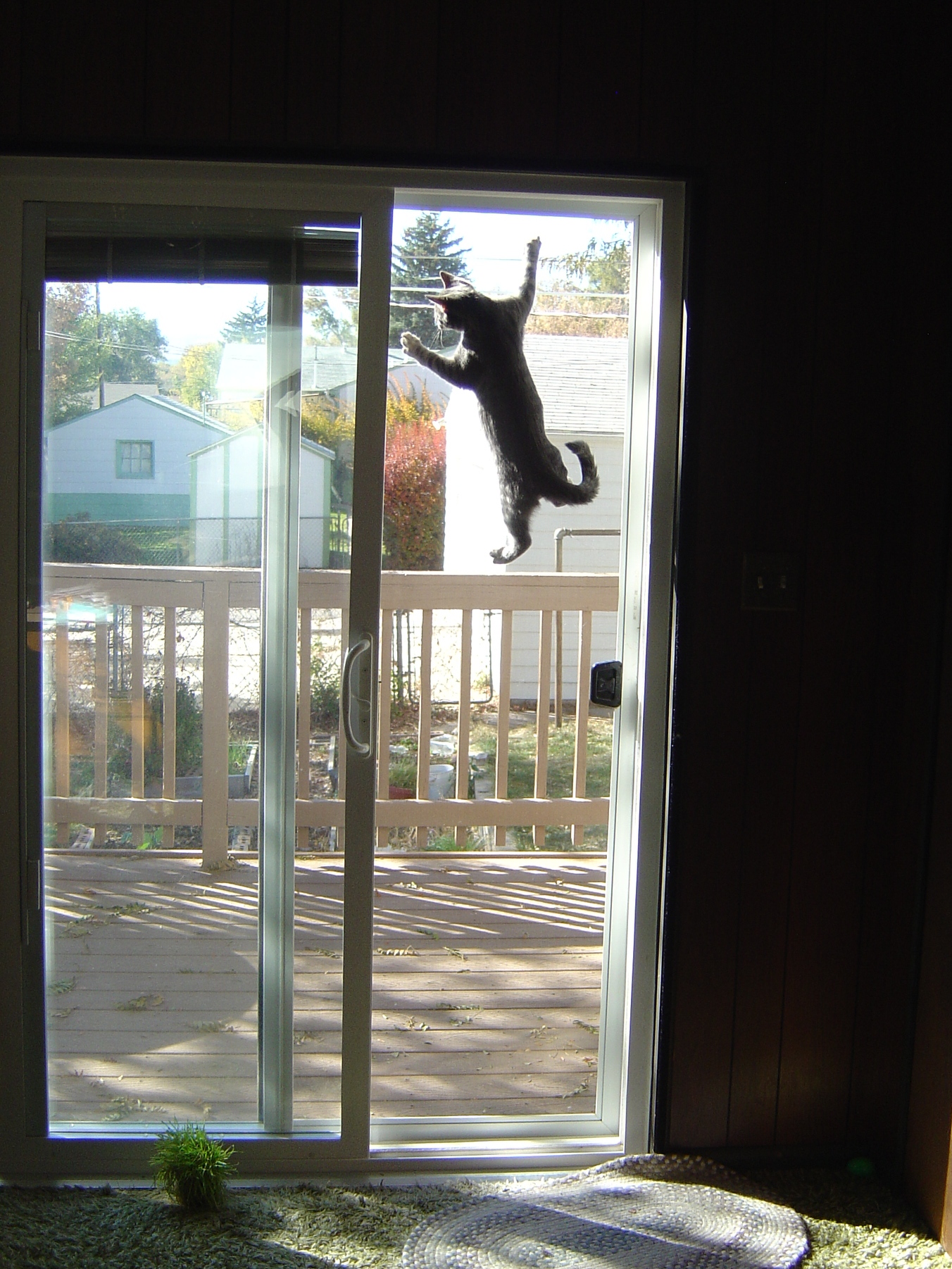
Why Does Your Cat Climb The Screen Door?

Cats are impressive climbers. In general, cats like to climb on top of things or inside of things.

Cats climb by using their claws on all four of their paws. They pull themselves upwards by digging their claws into the surface.

Because cats require claws to climb things, declawed cats are not very good climbers. Most (if not all) cats should be kept indoors, especially declawed cats. Declawed cats cannot easily climb things (such as trees) in order to get away from predators.


Learn More About Your Cat’s Behavior at Makati Dog and Cat Hospital

Thanks: http://whydoesmycat.com/articles/1184

http://www.photos-public-domain.com/wp-content/uploads/2010/08/kitten_climbing_screen_door.jpg

Why Does Your Cat Purr?

Purring occurs as a result of vibration of vocal cords due to neurological stimulation from brain activity. The purpose is uncertain but it does seem to be associated with pleasurable activity.

However, cats are also known to purr when ill or injured, which lead some to believe that the frequency of the vibration can be associated with greater healing. Purring also is reinforcing for people and therefore can increase the amount of petting.

Cats generally purr when in contact with someone; a favored owner stroking, nursing a kitten, or greeting a familiar partner-cat. Positive experiences also elicit purring, rolling or rubbing, being in a warm familiar environment or about to fall peacefully asleep.
Thanks: http://sandroadanimals.com/Data/clientservices/eventsatsandroad2/top10mostgoogledqu/DrGoogle-handoutCats.pdf

1 … 3 4 5